
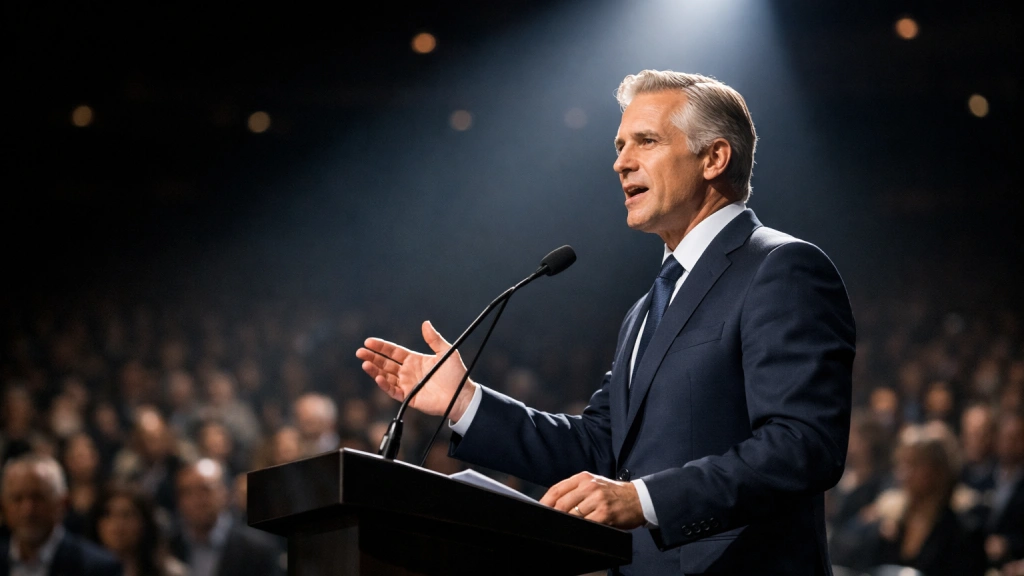
Have you ever seen the leader come on stage and, before they even uttered a word, you knew they were in charge? It is a fact that leadership is communication. You are unable to speak clearly and cannot lead. Whether speaking to the board, selling your department to motivate them, or addressing a prospective investor, your level of effectiveness as a leader is directly related to your capacity to articulate a vision. Ideas are money, and delivery is key in the hectic business world. Unless you can argue your points with sincerity and clarity, then they will not be of any value, however brilliant they are.
The most experienced executives, however, may find it difficult to reach an audience. Some of them use data-intensive slides, and some face the problem of nerves that weaken their authority. Learning how to talk is a lifelong process. To help you on this path, here are 7 essential public speaking tips for leaders designed to elevate your influence and ensure your message isn’t just heard, but felt and remembered.
Improving Executive Presentation Skills with Body Language
Your audience has already judged you before you utter even a single word. Studies indicate that a good proportion of communication is non-verbal, i.e. your body language preconditions what you are going to say. In high-stakes situations, it is important to master the art ofexecutive presentation skills, which involves having a comprehensive insight into physical presence.
The Leadership Gaze: Master Eye Contact
In a distracted culture, maintaining eye contact with the other person is a leadership gesture. Look at the eyes of one person at a time as he/she speaks with you, to form a real connection.
Stand Your Ground: Posture and Power
Stand with your feet shoulder-width apart in a power stance. This grounds you, prevents nervous swaying, and signals stability to your audience immediately.
Move with Purpose: Use the Stage
Use the stage deliberately. Step closer to the audience to emphasize a point. Move to the back to symbolically show the breadth of your vision.
Speak with Your Hands: Open Gestures
Your hands should tell the story. Keep them out of your pockets. Use open gestures to invite trust and keep them away from your face.
Polish Your Presence: Authority in Action
The correct polishing of these executive presentation skills makes sure that your physical presence supports your authority and does not in any way take it away. Confidence is an action you display.
Leadership Communication: The Power of Storytelling
If body language is the music, your content is the lyrics. Yet business is addicted to PowerPoint. We hide behind bullet points, hoping data will persuade. It won’t. Data informs, but emotion inspires.
Neuroscience proves stories release oxytocin, building trust. Stories make your message stick. Great leaders use narrative to frame data. Instead of a dry spreadsheet, tell the story of the customer your team saved.
Effective leadership communication follows a simple arc: the situation, the struggle, and the resolution. This structure turns jargon into a journey. When you replace data dumps with stories, you stop talking at people and start connecting with them, building the loyalty every leader needs.
Overcoming Stage Fright Before Big Meetings
It is a myth that great speakers feel no fear. The difference between a nervous amateur and a seasoned executive is not the absence of anxiety, but the ability to manage it. Even with decades of experience, the stakes of a board meeting or investor pitch can trigger a fight-or-flight response. The key to overcoming stage fright lies not in eliminating the adrenaline, but in channelling it.
Reframe the Feeling: Fear vs. Excitement
You are heart racing, your brain screams “fear.” But this reaction is the same as excitement. Remind yourself, I am excited, I am ready, so that you will change your attitude in a second..
Breathe with Purpose: The Box Method
Practice box breathing before you walk in: inhale for four, hold for four, exhale for four, hold for four. This lowers cortisol and steadies your voice.
Prepare to Overprepare: Know Your Content
Being well-versed in your material to the extent that you do not have to consider the words liberates your mind to participate. Anxiety is the last cure with preparation.
Speak Anyway: Fear is Fuel
It is not about not being afraid, but it is about having the fear and talking anyway. Learning how to overcoming stage right will see your real talents perform at their best times.
Why You Need a Speech Coach
Even the most experienced CEOs and leaders rely on coaches to refine their communication skills. A speech coach accelerates the learning process by providing personalized feedback, identifying habits that may distract or confuse an audience, and helping craft messages that resonate clearly and confidently. Effective communication is more than just speaking—it’s about timing, tone, body language, and connecting with listeners on an emotional level.
Working with a coach allows leaders to practice in a safe, constructive environment, turning weaknesses into strengths and building confidence for high-stakes presentations, interviews, or public appearances. Coaches also help develop storytelling techniques, persuasive delivery, and strategies for handling unexpected questions, making every interaction more impactful.
Ultimately, a speech coach doesn’t just improve how you speak it enhances how you lead, influence, and inspire others. Even the best executives invest in coaching because communication is the cornerstone of leadership success.
Conclusion
Having the ability to speak to the audience is a process rather than an endpoint. It takes deliberate effort to use these suggestions, whether it is dominating the room through your body language or simply relaxing your nerves by changing your mindset. To begin with, you can choose a single one of these areas, say storytelling or physical presence, and drill it intentionally.
You do not need to do it yourself. When you are willing to change your communication approach and make an unquestionable impression, professional advice can be the key to success.
Want to master the stage? Schedule a discovery call with Chidi for executive speech coaching.